You turn your back for four seconds to grab the olive oil from the pantry, and the trimmed chicken breast resting on your cutting board vanishes. In its place stands an eighty-pound retriever licking his chops, looking up with an expression of pure, unbothered innocence. Or perhaps your dog is smaller, launching onto their hind legs like a spring-loaded jack-in-the-box the moment a package of cheese crinkles.
Counter-surfing is one of the most maddening habits a pet parent can deal with. It turns weeknight meal preparation into an exhausting game of defensive culinary hockey. You chop onions with one hand while physically blocking the kitchen perimeter with your hip, constantly bracing for the next raid. Worse still, it is dangerous. Between sharp kitchen knives, smoking cast iron skillets, and toxic ingredients like onions, garlic, and chocolate, a dog with vertical ambitions can cause serious harm to themselves in an instant.
Yelling “Off!” after the fact rarely does a thing. Banishing this habit permanently requires understanding the canine brain, eliminating accidental rewards, and teaching an alternative behavior so reliable that your dog chooses their own bed over your kitchen island.
The Anatomy of Counter-Surfing: Why Scolding Fails
Most dog owners tackle counter-surfing with verbal reprimands. You catch your dog with two paws on the granite, clap your hands, shout “No,” and push them off. To a human, that interaction communicates disapproval. To a dog, you have just engaged in a thrilling game of physical tag, or at the very least, rewarded them with direct eye contact and vocal attention.
To fix this behavior, you have to look at the kitchen through the eyes of an opportunistic scavenger.
The Power of Intermittent Reinforcement
In the dog world, counter-surfing is the canine equivalent of a Las Vegas slot machine. A dog might jump up twenty times and find nothing more than a clean sponge or a dry dish towel. But on the twenty-first jump, they hit the jackpot: an unattended stick of butter or a slice of warm sourdough bread.
In behavioral psychology, this is known as a variable schedule of reinforcement. When a behavior produces an unpredictable, high-value payout, that behavior becomes extraordinarily resistant to extinction. Your dog does not care that they struck out twenty times yesterday. They will happily jump thirty times today because the memory of that one stick of butter never fades.
The Flaw of Delayed Correction
Dogs operate strictly in cause-and-effect windows measured in split seconds. If your dog grabs a strip of bacon off the counter, eats it, and you yell at them four seconds later as they swallow, the correction is functionally useless. In your mind, you are punishing the theft. In the dog’s mind, they were rewarded with delicious pork, and now their human is acting erratic for no apparent reason. The food has already reinforced the jump, rendering any subsequent scolding entirely meaningless.
Phase One: Bulletproof Environmental Management
You cannot train a dog out of a self-rewarding behavior while continuing to give them opportunities to practice it. Every single time your dog succeeds in swiping a crumb from the counter, your training resets to zero. Before you pick up a clicker or a treat pouch, you must enforce total environmental lockdown.
The clear-counter standard. Kitchen surfaces must be kept entirely barren when not in active use. This means no cooling cookies sitting under plastic wrap, no butter dishes on the island, and no bread bags left on the perimeter. If food must thaw, thaw it inside the microwave, the refrigerator, or an upper cabinet. Wipe down counters immediately after cooking to remove aromatic cooking grease that encourages scent-driven investigations.
Physical barriers. During the initial weeks of training, your dog should not have unmonitored access to the kitchen. Use freestanding baby gates, tension gates, or closed pocket doors to block entryways. If you have an open-concept floor plan that resists gating, use a designated exercise pen or keep your dog tethered to your waist on a hands-free leash when you are not actively working on training drills.
Management is not a cop-out; it is the scaffolding that allows new habits to take root. If your dog cannot physically reach the counters, they stop checking the counters.
Teaching the Incompatible Behavior: The “Place” Command
You cannot simply tell a dog what not to do. Nature abhors an instructional vacuum. If you take away counter-surfing, you must provide a concrete, highly rewarded job to replace it. The most effective antidote to kitchen chaos is teaching a rock-solid place command.
The premise is straightforward: your dog cannot have their paws on the kitchen counter if their entire body is lying flat on an orthopedic dog bed across the room.
Selecting and Positioning the Station
Choose a dedicated mat, cot, or flat dog bed with clear visual and physical edges. Raised elevated beds work exceptionally well because the physical drop-off at the edge gives the dog clear tactile feedback about their boundaries.
Position this bed outside the immediate kitchen footprint, but keep it within the dog’s line of sight. Dogs surf counters partly for food, but also partly because the kitchen is the operational hub of the house. If you banish your dog to a distant laundry room, they will fight to rejoin the action. Placing their mat six to ten feet away allows them to watch the dinner theater without being in your way.
Building Duration and Value
Do not expect your dog to hold this position while you roast a Thanksgiving turkey on day one. You must build duration gradually, away from mealtime distractions.
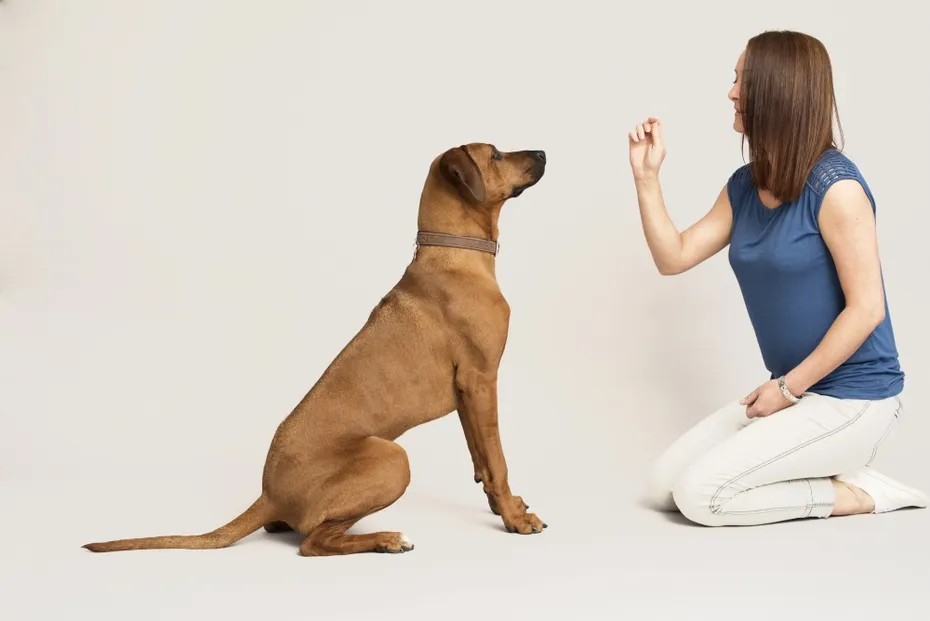
Lure your dog onto the bed, cue “Place,” and mark the exact moment all four paws settle on the fabric with a crisp verbal marker like “Yes” or a clicker. Immediately deliver a high-value treat between their front paws.
Keep your treat delivery low to the surface of the mat; you want the mat itself to feel like a magnet. Release them with a cheerful break word like “Free” and toss a piece of kibble away from the bed.
Gradually stretch the duration: five seconds, ten seconds, thirty seconds, two minutes. The rule of thumb during this phase is simple: deliver the reward to the dog on the mat, never call the dog off the mat to receive food. The bed is where all good things happen.
Proofing in the Danger Zone: The Kitchen Ladder
Once your dog understands that the mat is a high-yield zone during quiet training sessions, you must systematically introduce kitchen-specific triggers. Think of this as climbing a ladder, starting with low-arousal prep work and culminating in full-course dinner preparation.
Step 1: Low-Aroma Cold Prep
Equip yourself with a training pouch filled with bite-sized pieces of boiled chicken or string cheese. Send your dog to their place mat.
Walk over to your cutting board and perform a low-value task: wash an apple, slice a cucumber, or tear lettuce. Turn around, walk directly to their bed, and feed them. Return to your cutting board, chop another vegetable, and return to feed them again.
You are teaching your dog an unexpected pattern: your work at the kitchen counter predicts treats appearing on their bed, not from the kitchen edge. Keep these initial sessions under five minutes.
Step 2: The Sound and Motion Triggers
Dogs often respond to auditory cues before they ever catch a scent. The crackle of plastic deli wrappers, the thud of a butcher knife on wood, or the opening of the refrigerator door are classic action cues that send dogs sprinting into the kitchen.
With your dog stationed on their place mat, simulate these noises:
-
Open and close the refrigerator door, then immediately reward on the mat.
-
Rattle a plastic bag, then immediately reward on the mat.
-
Bang a stainless steel pot lightly on the stove, then reward on the mat.
If your dog breaks position and runs toward you, remain calm. Do not scold them. Simply close the pantry or set down the utensil, step into the dog’s space with your body, and calmly guide them back to their station using their collar or a light leash. Reset the drill, take one step backward in difficulty, and try again.
Step 3: High-Scent Cooking
The ultimate test of impulse control involves cooking actual proteins. Sizzling ground beef, frying bacon, or searing fish will flood your home with irresistible scents that challenge your dog’s self-control.
During the first several high-scent dinners, give your dog a long-lasting, focused project on their mat rather than relying entirely on sporadic treats. A frozen rubber toy stuffed with canned meat, peanut butter, and Greek yogurt can occupy a dog for thirty to forty-five minutes.
By pairing the smell of active cooking with an intense, licking-focused activity on their designated bed, you build an automatic associative response: when food is cooking on the stove, my job is to settle on my bed and work on my own puzzle.
The “Oops” Protocol: Handling Dropped Food
Every cook drops food eventually. A slippery piece of raw meat falls from the counter, bounces off your foot, and lands squarely on the tile floor. In an untrained household, this triggers a desperate, chaotic race between human hands and canine teeth.
To keep your kitchen safe, you must establish an absolute rule: dropped food is never fair game.
Practice intentional drop drills outside of actual cooking sessions. With your dog sitting on a leash a few feet away, hold a low-value piece of food, like a baby carrot or a slice of bell pepper. Drop it onto the floor while giving a firm “Leave it” cue.
Cover the dropped food with the sole of your shoe if the dog lunges toward it. The second your dog pulls their nose back and looks up at your face, mark the eye contact and deliver a completely different, much tastier treat from your hand or pouch.
With repetition, your dog learns that ignoring floor spills leads to a superior reward. When an accidental drop happens during actual meal prep, your dog will hesitate and look to you for guidance rather than diving headfirst beneath your feet.
Consistency Across the Household
The greatest enemy of counter-training is inconsistency. If one family member strictly enforces the boundary while another sneakily feeds the dog scraps from the prep board, your training will stall. Dogs are masters of discrimination; they will quickly learn which humans allow counter-grazing and which do not.
Convene a quick family meeting and establish ground rules:
-
No food is ever given directly from the cutting board, counter, or dining table.
-
All kitchen rewards must travel from your hand to the dog’s mat or bowl.
-
If someone is unable to supervise during meal prep, the dog must be placed behind a gate or in their crate with a chew.
Overcoming counter-surfing is rarely a matter of weeks; it is a gradual rewiring of an ancient predatory instinct. But when you replace aimless scolding with strict management, clear boundaries, and valuable alternative jobs, your kitchen changes completely. You get to chop, simmer, and bake in absolute peace, knowing your food is safe and your dog is resting happily in their own lane.